
A video appeared in an industry chat group I belong to, describing a campaign as highly successful. The presenter credited effective messaging and compelling content for delivering 246 leads to a client. On its face, 246 leads sounds impressive. The count alone does not establish whether the campaign succeeded.
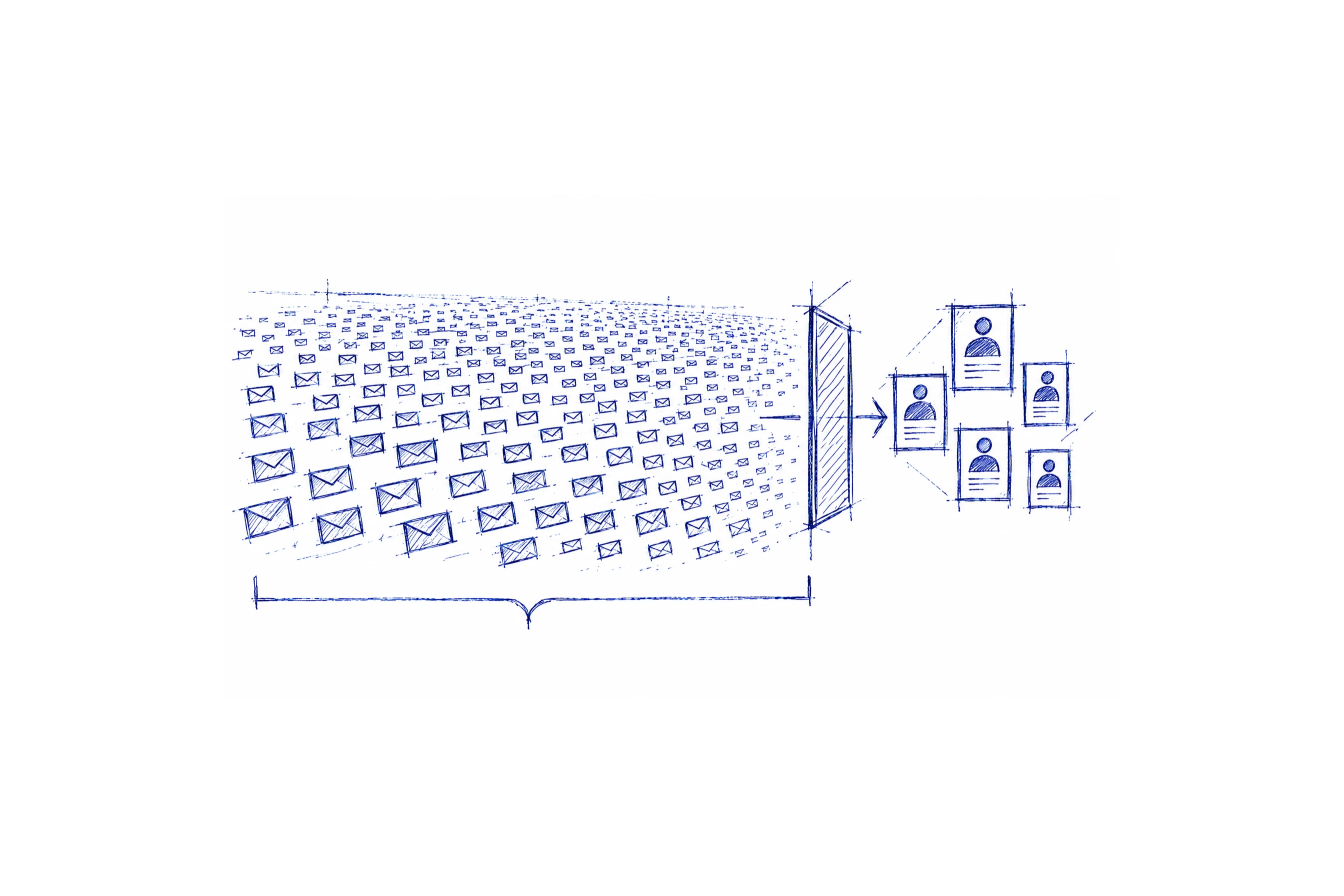
I wanted to know more, so I checked. Generating those 246 leads had required more than 1.2 million emails. The send total provides needed context. These totals still do not establish lead quality, cost or downstream revenue.
What do 246 leads from 1.2 million emails tell us?
Using 1.2 million as the approximate denominator, that is about 0.02 reported leads per 100 email sends, or one lead per roughly 4,900 sends. This is yield per send, not a campaign failure rate, a unique-recipient response rate or a measure of ROI.
Volume belongs in the account of the campaign. These totals alone cannot separate the contribution of messaging from targeting, reach or repeated sends.
When I raised this in the group, he became defensive. The reported totals still did not isolate the contribution of messaging. They showed the amount of email used to produce the lead count, not why the responses occurred.
Why does "out of how many" change the story?
Leave out the denominator and a count can tell almost any story. Compare "246 leads" with "246 out of 1.2 million." The first omits the workload; the second states the reported yield per send. Neither establishes commercial success without qualification, cost and revenue.
I see this error in sales and marketing reports more often than any other. The headline features the large numerator, while the denominator gets left behind. Decades of research describe the tendency. In a classic study, people preferred a bowl containing 7 red jelly beans among 100 to one containing 1 among 10, despite the better odds in the smaller bowl. The numerator captures attention at the expense of the base. State the denominator every time.
Did the messaging cause the leads?
The reported lead and send totals alone cannot distinguish the contribution of the message from targeting or volume. No comparison isolating those effects is described here. Ask "what can't this tell us?" and include messaging effectiveness among the unanswered questions.
That's what bothered me about the post. It assigned messaging causal credit without showing how that effect was separated from targeting and volume. Readers could change their messages based on a conclusion these totals do not establish.
Can most B2B companies make it up in volume?
A count of 1.2 million email sends need not represent 1.2 million distinct people. A campaign can send repeatedly to the same contacts. Assess its volume against the qualified market, unique recipients and contact frequency rather than treating the send count as the size of the market.
The post also left out the cost of volume. Irrelevant emails erode sender reputation and make the brand less welcome. In Gartner's June 2025 report on 632 B2B buyers surveyed in August–September 2024, 73% said they actively avoid suppliers whose outreach is irrelevant.
What should you ask before you celebrate a number?
Put these five questions to a result before celebrating it, whether you're presenting the number or someone else is:
-
What did the buyer actually do?
-
How do we know?
-
Out of how many?
-
What will we decide because of it?
-
What can't this tell us?
The 246-lead claim identifies a reported outcome; its meaning depends on the definition and quality of a lead. Question three requires the send count and, where relevant, the number of unique recipients. Question five should separate observed yield from unestablished messaging causation and ROI.
Give me a modest figure that answers all five over an impressive total that answers none.
Growth Orbit was founded by Steve Schilling.