
B2B sites should measure first and change pages later, because Google changed two separate systems in one week. The November 2026 core update started rolling out on November 10, and two days later Gemini 4 Hydrogen became the default model behind AI Mode. A page can win in one system and lose in the other, so a single traffic chart won't tell you which change moved it.
The useful response is narrow: understand what each change touches, take a clean baseline, wait for the rollout to finish, and then write for the way AI search actually researches a question.
What did Google actually change in November 2026?
Google shipped two unrelated changes 48 hours apart.
The core update. Google's Search Status Dashboard lists the November 2026 core update as starting on November 10 at 10:06 PT, with a rollout of up to two weeks. Core updates re-score the ranked index: the ten blue links and everything built on them. This one is the third of 2026; the previous one came in May. That's routine. Google re-weights its ranking systems a few times a year, and most sites see modest movement.
The model change. On November 12, Google made Gemini 4 Hydrogen the default model in AI Mode for all users and started using it for the "hardest questions" in AI Overviews, according to Search Engine Journal. Robby Stein, Google's VP of Product for Search, called it "the biggest model upgrade to Search yet." Hydrogen is the fast, efficient member of the Gemini 4 family. Google says it completes tasks 2.5 times faster than Gemini 3.8 Flash and scores 51 on the Artificial Analysis Intelligence Index at its default setting, one point above the larger Gemini 4 Argon (Google).
Google announced no new ranking factor with Hydrogen. The model changes how AI Mode breaks a question into sub-searches, which sources it picks and how it writes the answer. The core update changes how pages rank. Treat them as two experiments running at once.
Will search results change more than ever this week?
Probably not in the rankings, and nobody can show it yet. Early reports described chatter about the core update as "more muted than most" (Search Engine Roundtable). Third-party rank data is also less reliable than usual: Google has been serving "poisoned" results to automated rank trackers since September (Search Engine Land).
Even Search Console needs care right now. Google confirmed a logging error that depressed its Generative AI report from November 9 to 11 (Search Engine Roundtable). A dip in those three days is a reporting bug, not a verdict on your site.
So the claim that this is the biggest week of change in Search history is a prediction, not a finding. The bigger change is happening in the AI layer, and it's slower to show up in the dashboards most teams watch.
Is all of Search becoming AI search?
That's Google's stated direction. At I/O in May, Liz Reid, Google's VP of Search, said "Google Search is AI Search through and through". In October, Sundar Pichai described the goal as "one seamless experience across AI Overviews, AI Mode, and traditional Search" and reported Search's fastest query growth in five years.
Both facts matter. Demand isn't shrinking: people are asking Google more than ever. What's shrinking is the share of those questions that ends with a click to your site. In a randomized experiment, sending users to AI Mode cut click-through to websites by 18.8 percentage points (arXiv).
For a B2B company, that changes who reads your page first. Early in the buyer's journey, when a buyer asks AI Mode which approach fits their situation, the model runs the searches, reads the sources and writes the summary. Your page competes to be one of the sources it trusts and quotes, not just one of ten links a person scans.
How does an AI model decide which pages to cite?
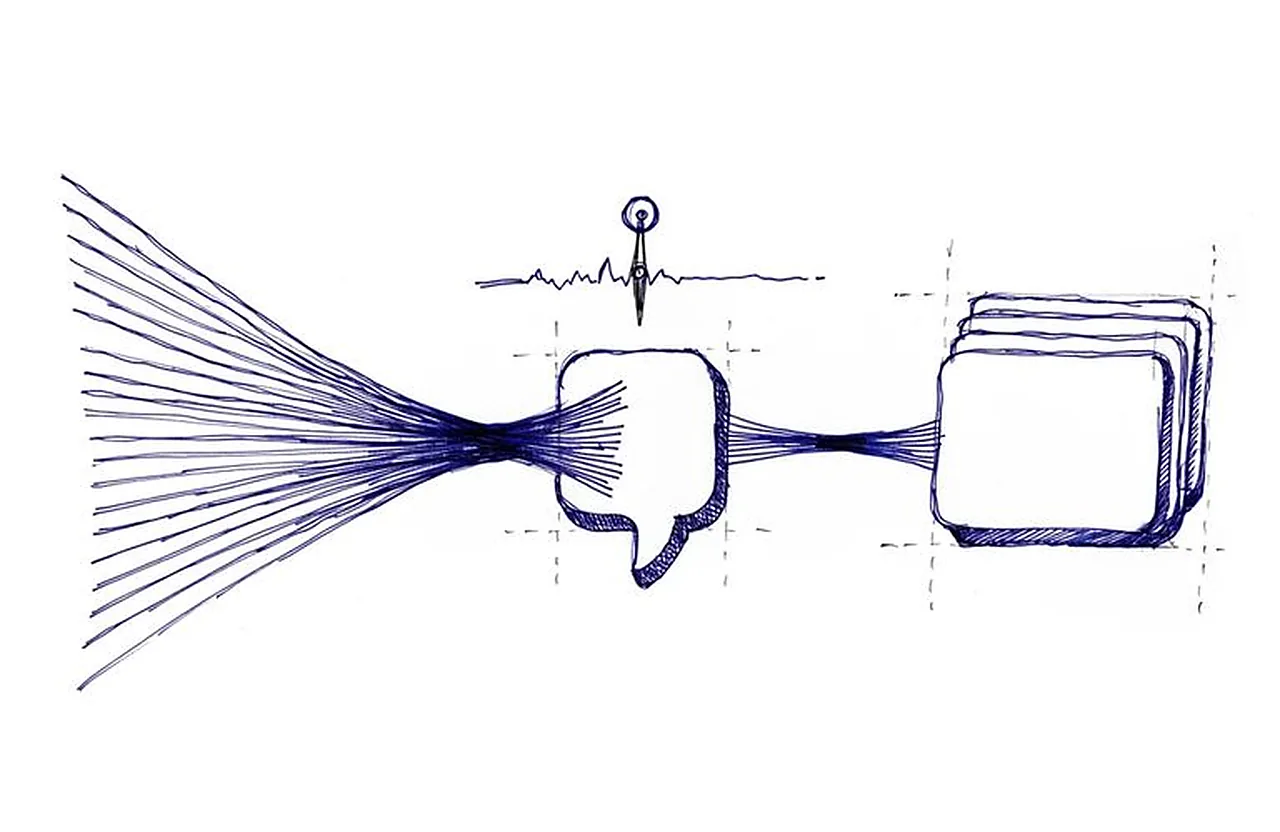
It breaks the question apart and looks for pages that answer each piece cleanly. Google calls this query fan-out: AI Mode turns one question into several sub-searches, gathers results for each, and assembles an answer. A smarter model runs that process better, which raises the bar for every source it considers.
That favors a specific kind of page:
- One clear question per page. A page that answers "How much does outsourced lead generation cost?" directly gives the model something to quote for that sub-search. A page that covers lead generation in general gives it nothing specific.
- The answer up front. Put the direct answer in the first two sentences, with a number where one is honest. Models lift what is stated plainly and early.
- Sourced, checkable facts. A claim with a named source and a link is easier for a model to trust and repeat than an unsupported superlative.
- Related sub-questions as short sections. Each section header written as the question a buyer would ask gives the model a ready-made match for a fan-out search.
None of this replaces traditional ranking. AI Mode still runs searches against Google's index, so a page that doesn't rank for the sub-search usually isn't in the candidate set. Backlinks and technical health still count. What's rising is the value of content that answers the exact questions buyers ask during research, because that's what the model goes looking for.
Why does the speed of change matter more than any single update?
Because the AI layer now changes on a model release cycle, while rankings still change on a core update cycle. In 2026 the model behind AI Mode changed several times: Gemini 3.5 Flash became the default in May (Search Engine Journal), paid subscribers later got Gemini 3.8 Flash as an option, and now Hydrogen is the default. Core updates arrived three times all year.
A team that plans its SEO around the core-update calendar is planning around the slower half of the system. The model that decides what buyers read can change between two of your quarterly reviews, and nobody will send you a notice.
That's an argument for building pages that hold up under any capable model, not for chasing each release. Clear questions, direct answers and real evidence were good practice before Hydrogen. They are the parts of a page a smarter model rewards most.
What should a B2B team do in the next two weeks?
Measure first, then act on what holds. In order:
- Take a baseline now. Record organic clicks, impressions and average position for the week of November 3 to 9, before either change. Split insights pages from service pages. Note how often AI Overviews and AI Mode cite your domain. Growth Orbit's own baseline on November 16, from Ahrefs, was 23 citations across 13 pages in AI Overviews and 5 in AI Mode.
- Freeze big page changes until the rollout ends. Google allows up to two weeks, which puts the end around November 24. If you retitle pages mid-update, you won't be able to tell whether a move came from Google or from you. Fix real problems, like broken schema or unsupported claims, right away; hold the cosmetic ones.
- Read the results a week after Google marks the update complete. Compare the clean before-week with a full week after. Ignore moves under 20% in clicks or three positions; that's normal core-update noise. Act on pages that moved more and stayed moved.
- Track AI visibility, not just rank. Pick the 20 to 25 questions your buyers actually ask about their pain points and check, every week, which assistants name you in the answer. A ranking report can't show you this.
- Write the next piece for fan-out. Name the one buyer question it answers, answer it in the first two sentences, then cover three to five related questions as short sections with sourced facts.
One caution before you put more hours into SEO: check where your pipeline actually comes from. If most of your meetings come from relationships and outbound, a ranking swing may barely touch revenue. Pull organic-sourced meetings for the same weeks before deciding how much the update matters to you.
What to take away
- Google changed two systems in one week: the core update re-scores rankings, and Gemini 4 Hydrogen changes how AI Mode researches and writes answers.
- Ranking volatility so far looks normal, and rank-tracking data is noisier than usual. Don't react to the first week.
- Demand for Search is growing while clicks per question fall. Your page is increasingly read by a model before a person.
- The AI layer changes faster than rankings. Build pages that any capable model can quote: one question, a direct answer, checkable evidence.
- Take a baseline now, wait for the rollout to finish, and act only on changes that hold.
If you want to know which of your buyers' questions you can actually win, start by mapping the market those buyers come from. A coverage-gap analysis shows how much of it your CRM can see today.